in the works…
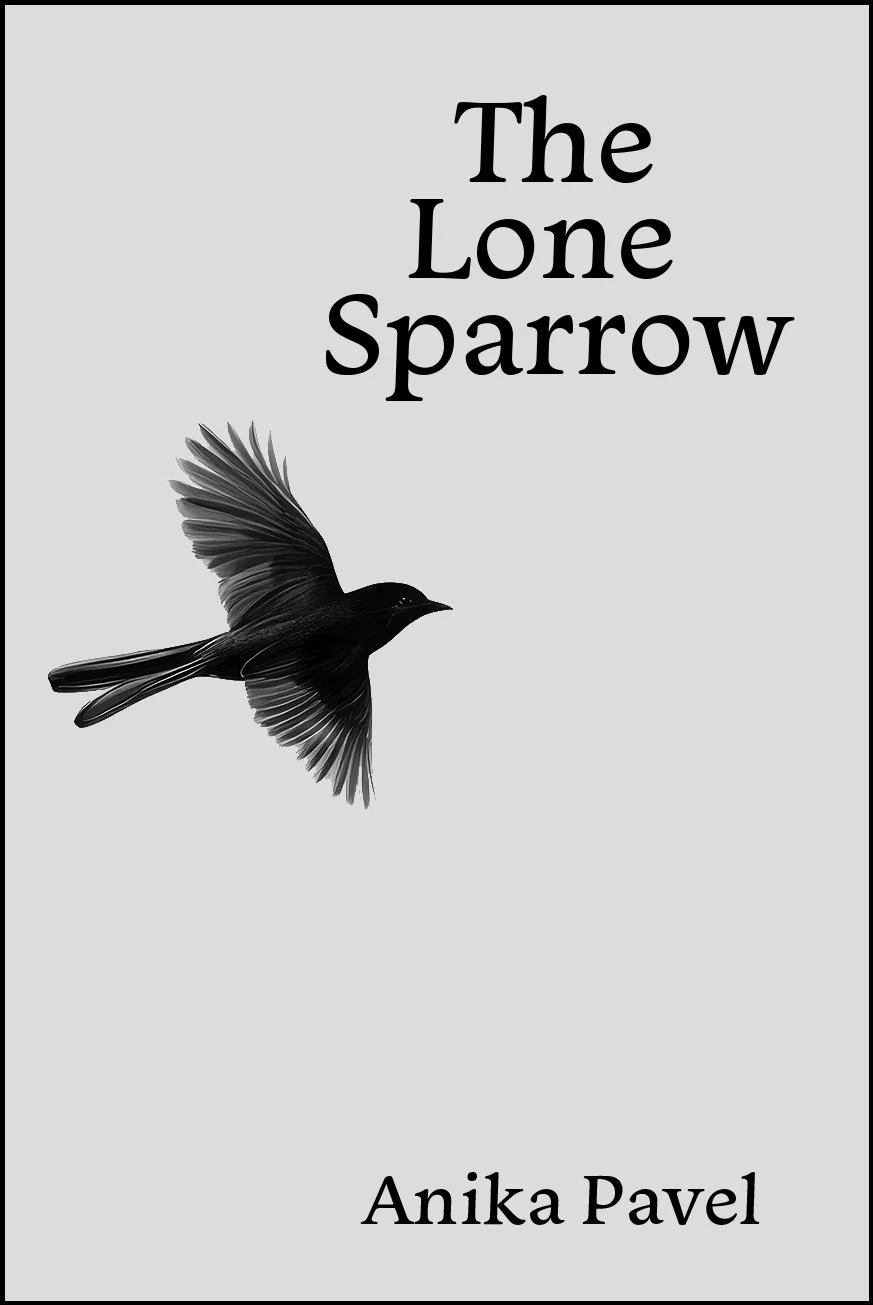
Draft cover design
The Lone Sparrow
The Lone Sparrow is a cold-war era drama about an exiled, and then imprisoned, journalist’s fight for human rights and freedom of speech against the backdrop of Czechoslovakia’s struggle for independence during the tumultuous decade of the 1970s.
Tatiana Hrda, stranded in London by the Soviet invasion of Czechoslovakia in August 1968, works at the BBC World Service. Two years after starting at the BBC, Tatiana survives a hit-and-run ordered by the KGB. Reeling from the near-death experience, she makes a dubious decision to marry Salem Gott, an American businessman who, unbeknownst to her, buys guns from Czech communists.
In January 1977, the manifesto Charter 77, which demanded free speech and basic human rights, is published in Prague. Tatiana, who by then is divorced and heart broken, takes on a risky assignment from her new employer, The Washington Post, and goes back to her homeland. She is arrested and put into the infamous Pankrac prison in Prague, where her survival is in doubt.
Left without options, Tatiana’s best chance for freedom may depend on Cassandra Milna, a woman who was responsible for the breakdown of Tatiana’s marriage. But Casandra lives by her own rules and her views of personal freedom is as expansive as her view of marital fidelity.
When Cassandra comes into possession of secrets going back to World War II, she decides to take action, setting in motion a chain of events that indelibly marks both women.
The Lone Sparrow is a romance fiction influenced by first-hand accounts and recollections of the Cold War; it also foreshadows present events in Ukraine. In addition to dramatizing the human impact on lives lived on both sides of the Iron Curtain, the novel exposes the deeply held misogyny typical of communist leadership even as it preached female emancipation.
*****
Excerpt
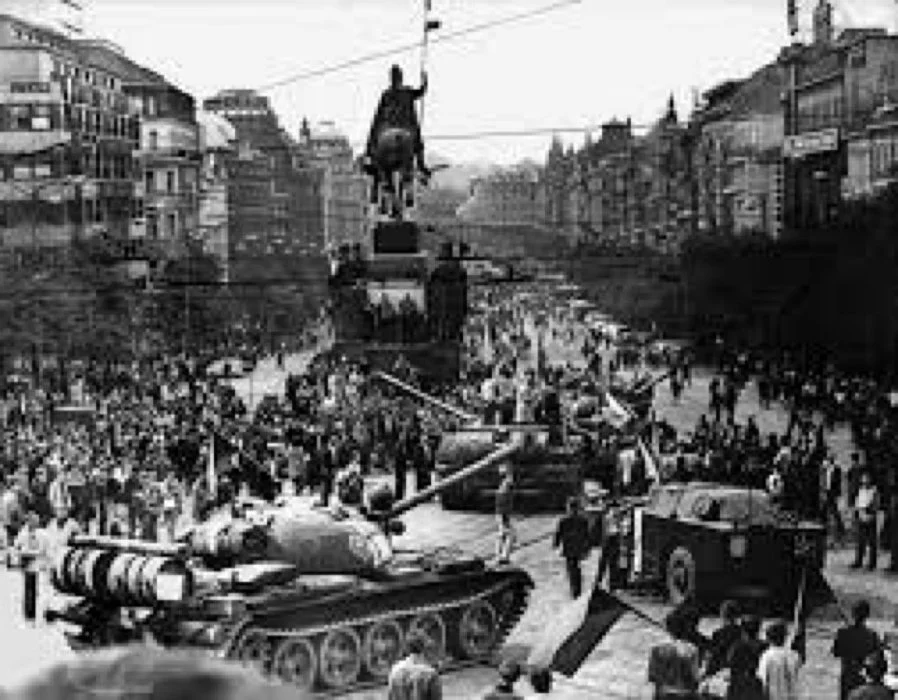
King Wenceslas looks on at the carnage below surrounded by Soviet tanks.
1971
Tatiana Hrda stepped out of the BBC building. At two in the morning The Strand seemed peaceful if not quiet. She mounted her bicycle to begin the hour-long journey to her bedsit in Kew Gardens. The occasional bus or a car passed her by, leaving behind the smell from the exhaust pipe. She focused on the warning she received in her father’s letter.
Be careful riding your bicycle in the middle of the night.
There is nobody else on the road, she had written back.
She smiled at the ritual she and her father followed in every letter. He worried; she was reassuring. She reached Chiswick High Street, a signal that she was not far from her destination when she heard a car, tires screeching, speeding toward her.
“Idiot,” she mumbled, moving her bike as close to a curb as possible. The lights blinded her and for a split second, she saw a shadow fly into a brightly lit space…
CHAPTER ONE
Tatiana studied English at Komenskeho University in Trnava, in communist Czechoslovakia. She had entered the university while the country was in the iron grip of the Soviet Union, but she graduated in 1968, during the spring of secretary of the Communist Party Alexander Dubcek’s promise of hope and change. After, she went to London with her schoolmate Karolina Smolekova. They worked as waitresses for the summer so that they could practice English.
On August 20, the two friends went to sleep, their only worry being how to afford the miniskirts they had seen in C&A on Oxford Street. The next morning, they learned with the rest of the world that during the night airplanes full of tanks and artillery had landed at Ruzyne Airport and took over the country while the nation slept.
Tatiana and Karolina listened to their wireless radio in broken hearted silence. The tanks moved towards the radio station where, risking their lives, the journalists broadcast to the nation the truth as it unfolded. People tried to stop the advancing tanks by putting old bikes, carts—anything they could find—in their way, but the tanks destroyed everything in their path. They surrounded the broadcasting building and the airwaves went silent.
The next day, Tatiana heard her father’s voice over the crackling telephone line.
“Don’t do anything hasty. This is your chance for freedom…”
For some time, she held the dead telephone line in a hope that her father’s voice would come back. Her hands trembled when she reluctantly put the receiver back.